When shopping for a commercial robot mower for Australian orchards, solar farms or large acreage sites, one common trap is exaggerated mowing area claims. Many manufacturers advertise theoretical maximum coverage that does not match real-world working conditions.
What is the difference between theoretical and actual mowing area?
Theoretical area data is calculated under ideal conditions: flat ground, no obstacles, continuous straight runs, and fully charged batteries. This number is often shown prominently on product brochures and ads.
Actual working area reflects your real site. Trees, uneven ground, slopes, rocks and frequent turns slow the robot down. Battery consumption also rises on rough terrain, which reduces the area it can finish in one charge.
Why area overclaims matter for Australian commercial buyers
For farm or orchard managers, buying based only on the advertised large area can lead to scheduling failures. If the robot cannot finish your target zone within your planned working hours, you will need extra units or manual support, raising your total cost.
Many buyers in Australia only discover this gap after delivery. Testing before purchase helps prevent expensive mismatches.
How to verify true mowing capacity
- Ask suppliers for real test footage from sites similar to yours, such as orchards or solar farms.
- Confirm the test terrain: slope level, ground surface and obstacles.
- Check battery cycle data and continuous working time.
- Request site assessment or on-site demo if available.
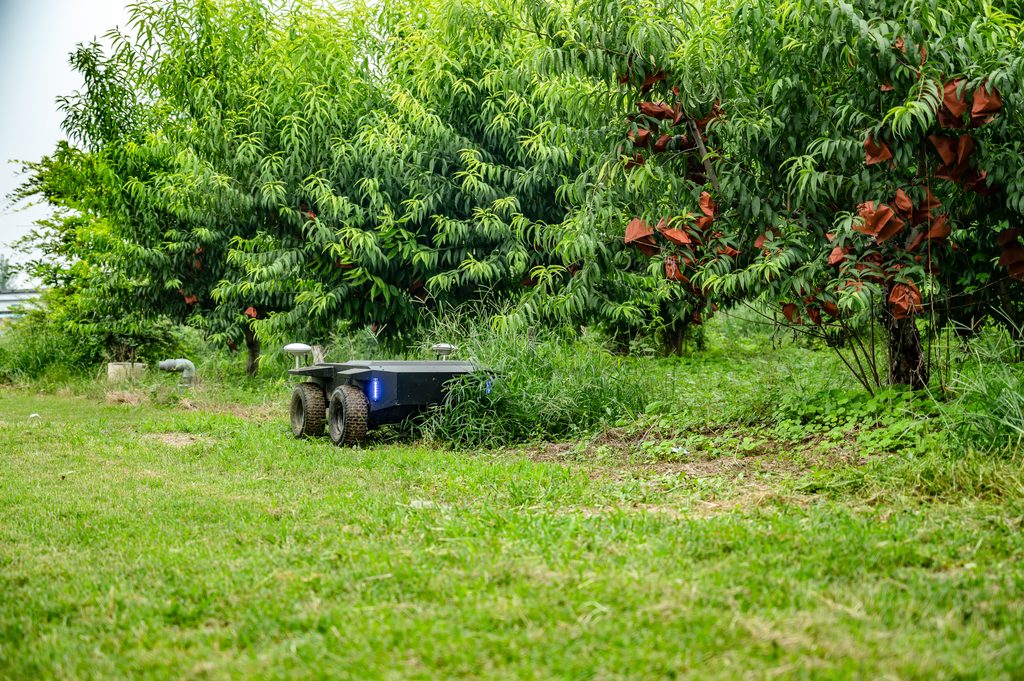
R1 commercial robot mower working in Australian orchard, reliable real mowing capacity
Our machine’s real performance
Our commercial robotic mower provides honest, field-tested mowing data. The rated working area is measured under real orchard conditions, not only flat open land. It is built for continuous vegetation maintenance on large rural sites across Australia, without inflated marketing numbers. For more details about orchard uneven ground, learn the terrain limits for commercial robotic mowers.
FAQ
Q: Should I trust the maximum area listed on product pages?
A: Treat it as a theoretical reference. Always ask for real-world test results matching your land type.
Q: What factors reduce actual mowing area most?
A: Slopes, uneven ground, frequent obstacles and thick grass will increase power use and lower the finished area per charge.
Q: Can I get a site evaluation before buying?
A: Yes. Contact us to share your land size, terrain and vegetation condition for a practical capacity assessment.
Pingback: Laser vs Non-Laser Robotic Mower Obstacle Avoidance for Australian Orchards