For solar farm operators and EPC contractors across Australia, vegetation control is a recurring, labour-heavy maintenance task. Traditional slashing and manual mowing carry risks of damaging solar panels, wiring and mounting structures, especially on undulating, sloped sites. A tracked robot mower built for solar farm applications delivers consistent, low-intervention mowing to keep aisles clear, reduce fire risk and cut ongoing labour costs.
Our T1 tracked robotic mower uses RTK satellite navigation, with no perimeter wire required. It is designed to travel along narrow solar panel aisles, adapt to uneven terrain and handle loose soil common at remote solar sites. To explore more options for commercial land maintenance, view our guide about commercial robotic mowers australia.
The tracked design distributes weight evenly, so it avoids sinking into soft or damp ground. It can navigate gradual slopes and rough ground that wheeled mowers struggle with. You can set separate no-go zones around panel foundations and electrical cabinets, schedule automatic mowing cycles and monitor the machine remotely. This makes it ideal for both new solar installations and established utility-scale solar farms.
Regular automated mowing suppresses tall grass and weeds, lowering bushfire hazard and reducing the need for chemical herbicides. The machine can run continuously across large sites, reducing the frequency of manual site visits for vegetation management.
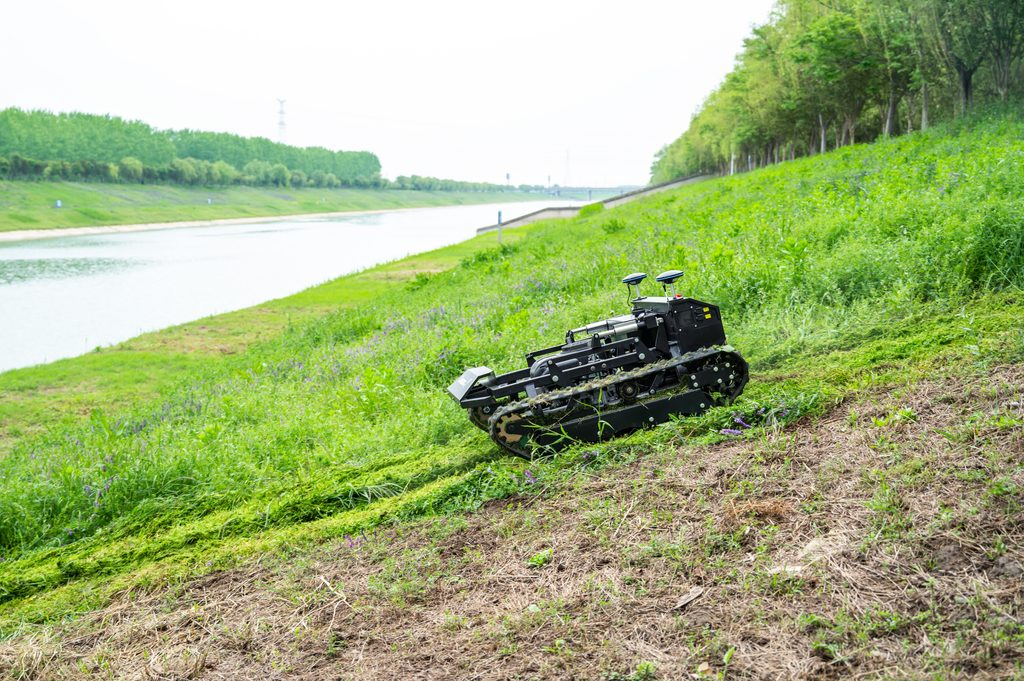
T1 tracked RTK robot mower working in Australia
FAQ
Q: Can a tracked robot mower fit inside solar panel aisles? A: Our T1 tracked mower is sized to travel through standard solar farm aisles. Confirm your aisle width before purchase to ensure suitable clearance.
Q: Does this solar farm robot mower need boundary cables? A: No. RTK mapping sets working zones and exclusion areas digitally, with no buried wire required.
Q: Is tracked mower better than wheeled units for solar farm sites? A: Tracked models perform better on loose, sandy, muddy or sloped ground typical of rural Australian solar sites. Wheeled versions suit flatter, firmer terrain.