Buying a robotic mower for your Australian orchard requires more consideration than just price. You need to assess slopes, uneven ground, tree roots and obstacle detection. Learn about the real working area of commercial robotic mowers.
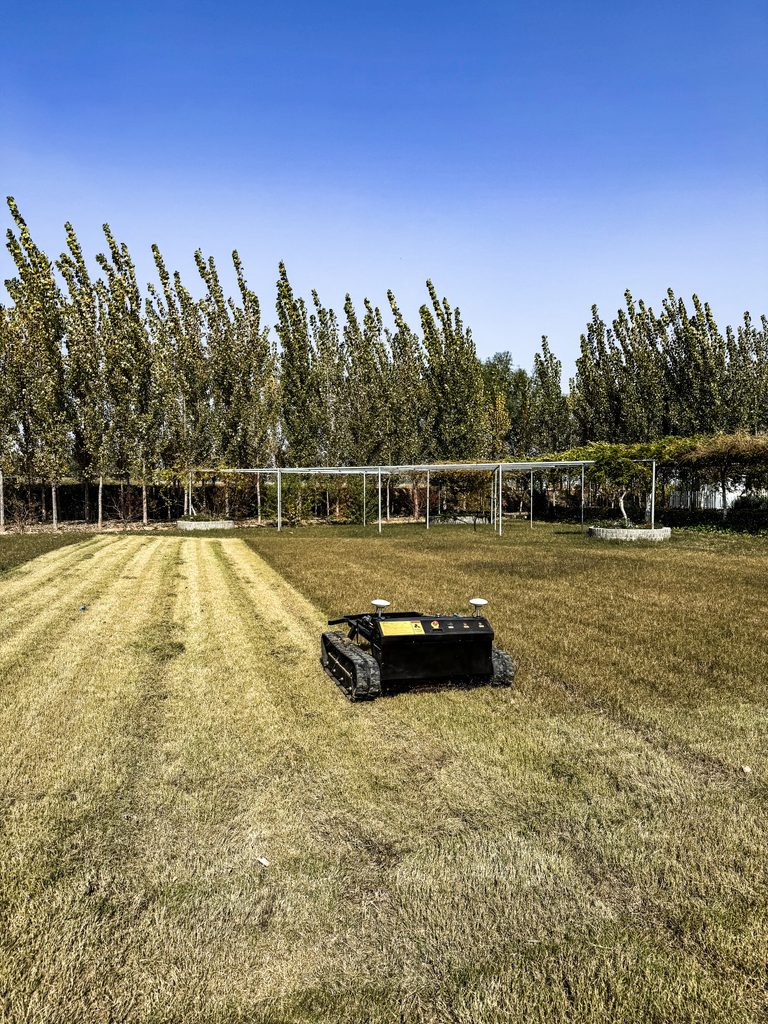
Commercial robotic mower working on grass
Orchard environments are far more complex than open flat lawns. Trees, exposed roots, undulating ground and varying grass thickness all affect mowing results. Many commercial mowers perform well on simple sites but struggle under orchard conditions.
Before you place an order, evaluate your site’s maximum slope. Check tree spacing and whether low-hanging branches will interfere with the machine. Also confirm the mower can navigate between rows reliably without getting stuck.
You should also clarify obstacle handling capacity. Small rocks, fallen branches and uneven soil are common in orchards. Good detection helps the mower avoid damage and maintain continuous operation.
Battery runtime and charging strategy are another key point. Large commercial orchards need enough continuous working time to finish scheduled mowing tasks each day.
FAQ
Q: What terrain suits robotic mowers in orchards? A: Robotic mowers work best on gentle slopes. Dense tree roots and uneven ground need strong obstacle detection.
Q: Which feature matters most for orchard mowing? A: Reliable navigation and obstacle avoidance are top priorities for commercial orchard robotic mowers.
Pingback: Robotic Mower for Australian Solar Farm Vegetation Control